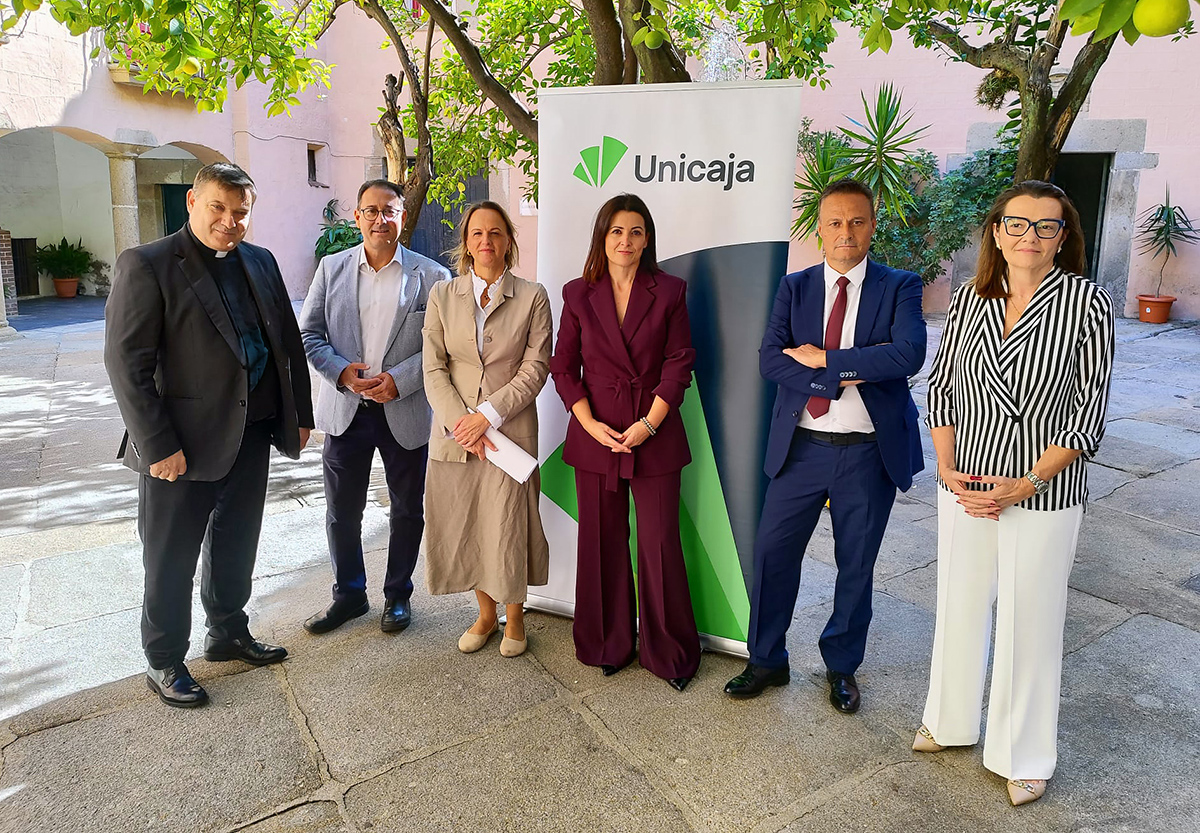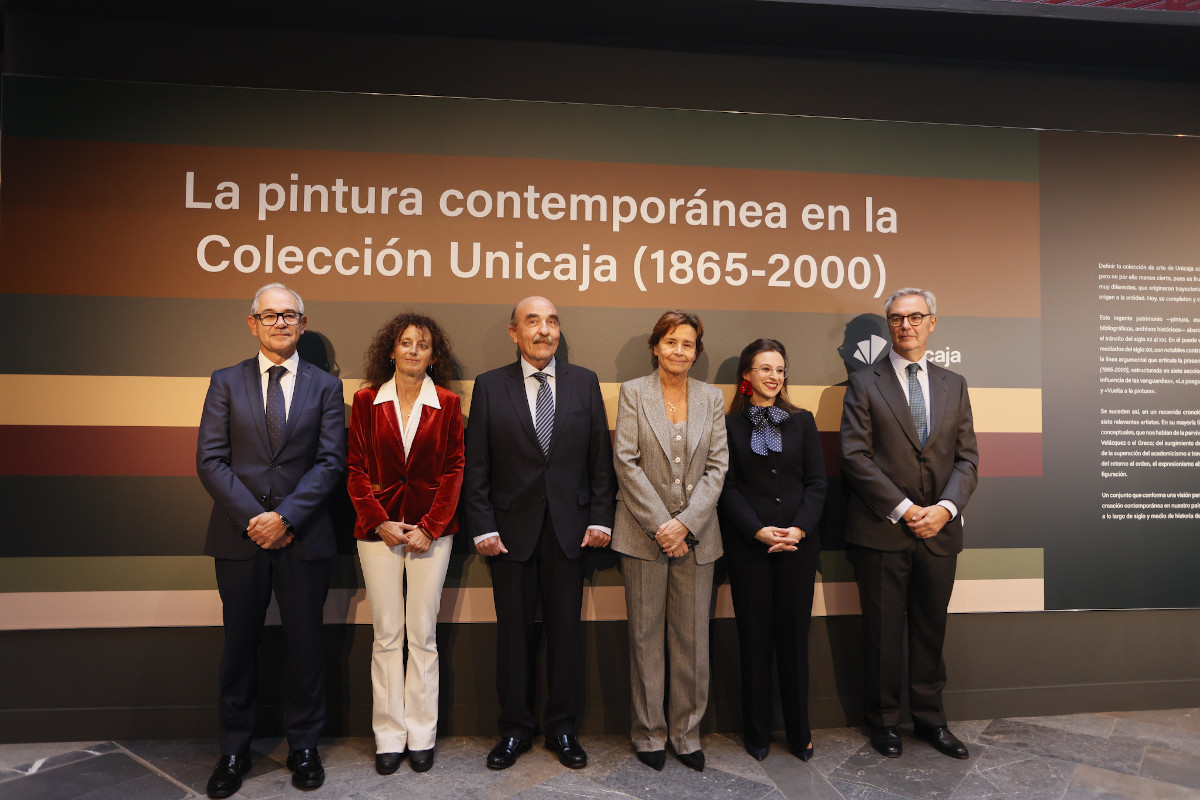
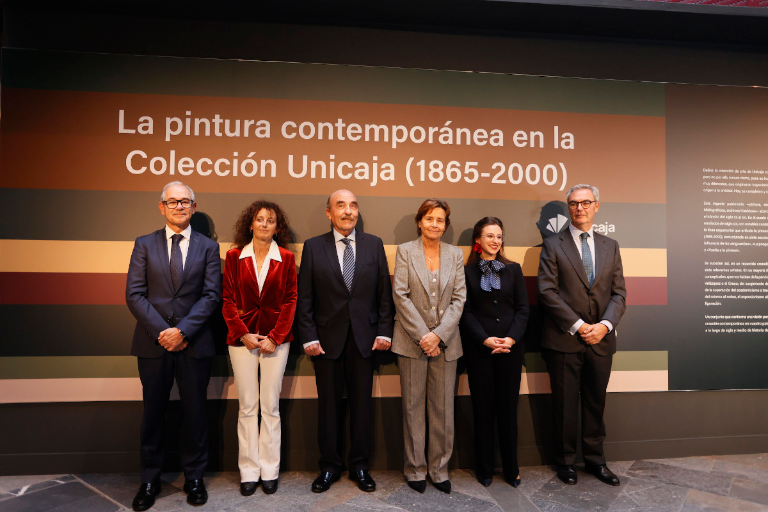
Unicaja has inaugurated this Thursday, at the Palacio de Revillagigedo in Gijon, the exhibition 'Contemporary Paintings in the Unicaja Collection (1865-2000)', an exhibition that offers a journey through a century and a half of art history through 84 works selected from its art collection. The exhibition will be open to the public until 28 December.
The exhibition brings together pieces by some of the most outstanding names in Spanish art, such as Evaristo Valle, Darío de Regoyos, María Gutiérrez Blanchard, Fernando Zóbel, Gustavo Torner, Juan Genovés, Eduardo Úrculo, Isabel Villar and Juan Uslé, among others. The works have been selected by historian Javier Baron under criteria of quality, diversity and representativeness, with special attention to female creation.
During the opening ceremony, the chairman of Unicaja, José Sevilla, thanked Fundación Cajastur and the Town Hall of Gijón for their collaboration in making this exhibition possible, which "reflects Unicaja's firm commitment to culture and to the conservation and dissemination of the national artistic heritage". He added that "it is an honor to present this exhibition in Gijón and Asturias, one of our regions of origin". He also pointed out that the exhibition "is also a way of bringing art closer to the people, of sharing a legacy that is part of our collective history".
For her part, the curator of the exhibition, Gretel Piquer, indicated that "this exhibition allows for an extraordinary and coherent journey from the mid-nineteenth century to the dawn of the 21st through the Spanish pictorial creation: both developed within the country and abroad, in contact with international movements that marked the avant-garde art at all times, highlighting how these reach even those creators who live in geographical peripheries".
The exhibition is divided into seven thematic sections that cover the main artistic movements that emerged in Europe from the mid-19th century to the end of the 20th century. From realism and symbolism to abstraction, expressionism or the new figuration, visitors will be able to explore how Spanish artists interpreted and transformed international trends, generating their own epoch-making styles.
In addition, the exhibition includes works by Asturian artists linked to landscape and romanticism, as well as representatives of key groups such as El Paso, the Cuenca Group and the New Figuration of Madrid.
An artistic legacy at the service of society
The Unicaja Collection is made up of a group of works that represents the wealth of Spanish art -and, by extension, of universal art-. This valuable legacy has been transmitted through the artistic heritage of the entities that make up the roots of what is now Unicaja.
The exhibition is divided into seven thematic sections that cover the main artistic movements that emerged in Europe between the second half of the 19th century and the 20th century, offering visitors a complete and contextualized experience.
The first section, From Realism to Symbolism, brings together two major nineteenth-century currents with a remarkable variety of themes. Landscape, linked to romanticism and European travels, becomes the protagonist in works such as Pablo Gonzalvo's Portada de la Universidad de Salamanca (1874). In contrast, symbolism is manifested in pieces such as La Música (1914), by Rogelio de Egusquiza, and La cocotte (c. 1900-1910), by Federico Madrazo.
The second section, Post-Impressionism, brings together artists who opened new plastic paths at the end of the 19th century. Works such as Víctimas de la fiesta (1894), by Darío de Regoyos, and Romería (c. 1918) or El Rinconín (c. 1948), by Evaristo Valle, stand out. Also included are pieces by Julio Romero de Torres and José Gutiérrez Solana, reflecting symbolism and the evolution towards more personal styles.
The third section, The Influence of the Avant-Garde, presents artists who radically renewed the pictorial language. María Gutiérrez Blanchard, Pancho Cossío and Francisco Bores are the protagonists of this stage with works that move between cubism, surrealism and fauvism.
The fourth section, Postwar, shows a return to spiritual realism and landscape as a path to modernity. Authors such as Gerardo de Alvear, Miguel Villá and Álvaro Delgado, who provide an introspective and serene look after the conflict.
Informalism and Neo-figuration, the fifth section, reflects the rise of abstract art in the 1950s and its subsequent figurative reaction in the 1960s. Works by Antonio Saura, Antonio Suárez, Fernando Zóbel and Gustavo Torner are included. The influence of Pop Art is also highlighted in works by Eduardo Úrculo and Isabel Villar.
The sixth section, International Look, incorporates works by European and American artists such as Sol LeWitt, Joseph Kosuth and Georg Herold, broadening the horizon of the collection towards global currents.
Finally, Back to Painting analyzes the return to figuration in the 1980s and 1990s, with artists such as Juan Giralt, Xavier Grau and Juan Uslé, whose works combine abstraction, geometry and reflection on the creative process.
Commitment to culture and territory
This exhibition in Gijón reinforces Unicaja's commitment to cultural promotion in the regions where it is present, and joins its support for education, sports, research and social action.