Unicaja is contributing to the promotion and appreciation of Antonio Pedrero’s artistic legacy through the temporary loan of four works from its collection for Antonio Pedrero. Retrospective. 1952-2026, a major exhibition dedicated to the painter and sculptor from Zamora that can be visited in Madrid throughout September.
Organised by the Pedrero family and sponsored by the Provincial Council of Zamora, the exhibition is being held at Casa de Vacas, the cultural centre located in Madrid’s Retiro Park. Following its opening on Thursday, it will remain open to the public until 27 September.
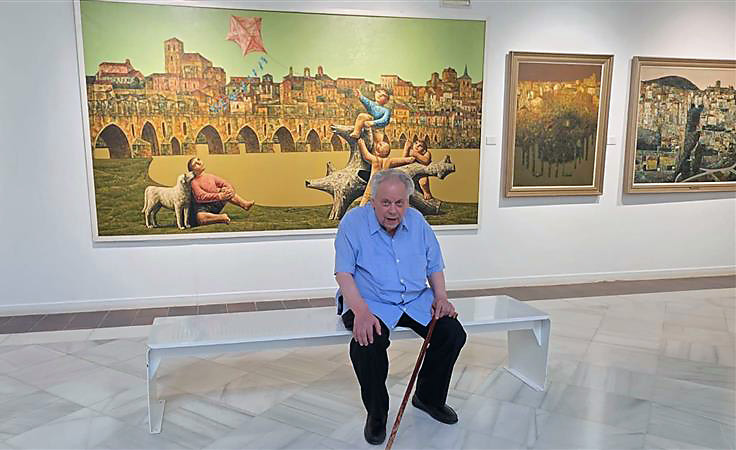
Antonio Pedrero. Retrospective. 1952-2026 brings together more than 100 works created over the last 75 years by painter and sculptor Antonio Pedrero (Zamora, 1939), widely regarded as one of the most representative artists from Zamora of the second half of the twentieth century and the first decades of the twenty-first century.
Four works from Unicaja's collection
Among the works featured in the exhibition are four pieces from Unicaja’s collection: the mural Niños y cometas (Children and Kites, 1985), the oil painting Sanabresa con dos niños (Woman from Sanabria with Two Children, 2001), and the drawings El ciego (The Blind Man, 1959) and El cantaor (The Flamenco Singer, 1959).
The latter two works are preliminary portraits for the large mural La Golondrina (The Swallow), which depicts the atmosphere of Zamora in the 1950s from the perspective of the bar-restaurant run by the artist’s parents and serves as the image for the exhibition poster.
Unicaja’s collaboration in this exhibition reflects its commitment to culture and to the preservation, promotion and dissemination of artistic heritage, facilitating public access to works of particular significance and helping to safeguard and share cultural legacy.
The bank’s participation has enabled the inclusion of representative works from Antonio Pedrero’s artistic output and contributes to bringing together an extensive selection spanning his career, with pieces drawn from private collections, the artist’s own collection, and the holdings of a range of institutions and organisations.
The exhibition offers a journey through different periods, styles and themes across Pedrero’s extensive body of work, featuring drawings, oil paintings, murals and sculptural maquettes. The works range from his earliest academic creations to pieces completed in 2024, and also include self-portraits produced at different stages of his career.
Visitors will also discover some of the artist’s principal sources of inspiration, including the architecture and landscapes of the province of Zamora, with references to locations such as Toro, Aliste, Benavente, Sayago and Tierra de Campos, alongside scenes and characters linked to rural life in Castile and León.
Sanabria, where the artist has spent his summers for more than 60 years, and Zamora’s Holy Week celebrations are other recurring themes within his creative universe and are therefore prominently represented in the exhibition.
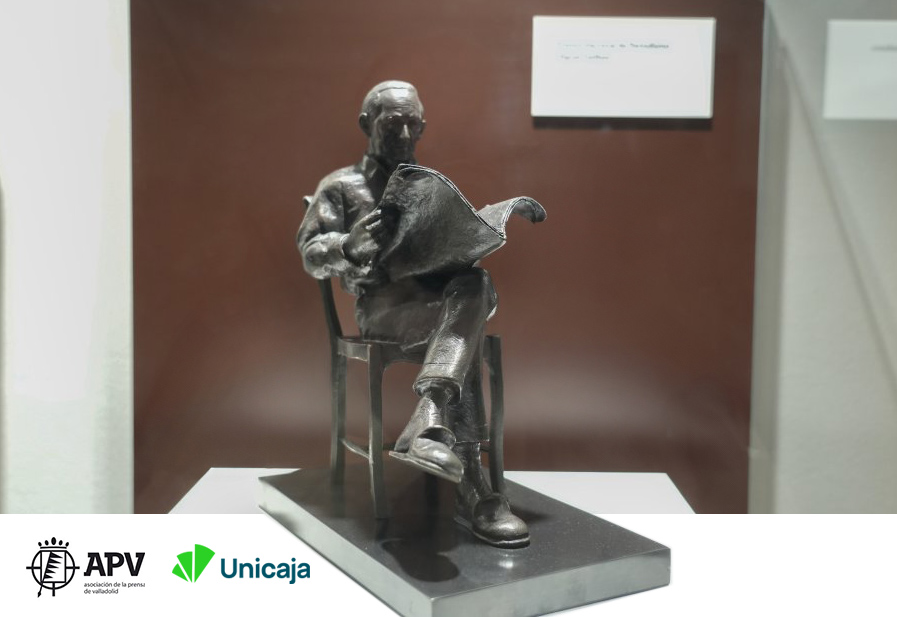
The exhibition is completed by a selection highlighting Pedrero’s sculptural work, featuring maquettes of several pieces alongside photographic reproductions of installations located in cities such as Cáceres and Zamora.
Commitment to culture and heritage
Unicaja’s participation in this exhibition reflects its commitment to culture and to the preservation and promotion of artistic heritage. The bank develops and supports cultural initiatives that help bring art and culture closer to society while highlighting the richness of the heritage associated with the regions in which it operates and with which it maintains strong historical ties, including Castile and León.
Through the temporary loan of these four works for Antonio Pedrero. Retrospective. 1952-2026, Unicaja is helping make possible an exhibition that brings together a broad representation of the career of one of Zamora’s leading artistic figures, while promoting his work to a wider audience in a landmark cultural venue such as Casa de Vacas in Madrid’s Retiro Park.