Unicaja and the University of Málaga (UMA) have launched the Chair in Risk Management, Sustainability and Business Digitalisation, an initiative aimed at strengthening training, applied research and knowledge transfer in three key areas for the future of business organisations.
Unicaja is participating in the project as a founding sponsor and will sit on its Monitoring Committee (the highest governing body responsible for defining policy, approving activities and overseeing their implementation and outcomes), where the organisation will be represented by Evaristo Ramírez Llamas, Director of Strategy and Sustainability. This reflects the strategic nature of the Chair and its connection to key areas such as risk management, sustainability, digitalisation and business decision-making.
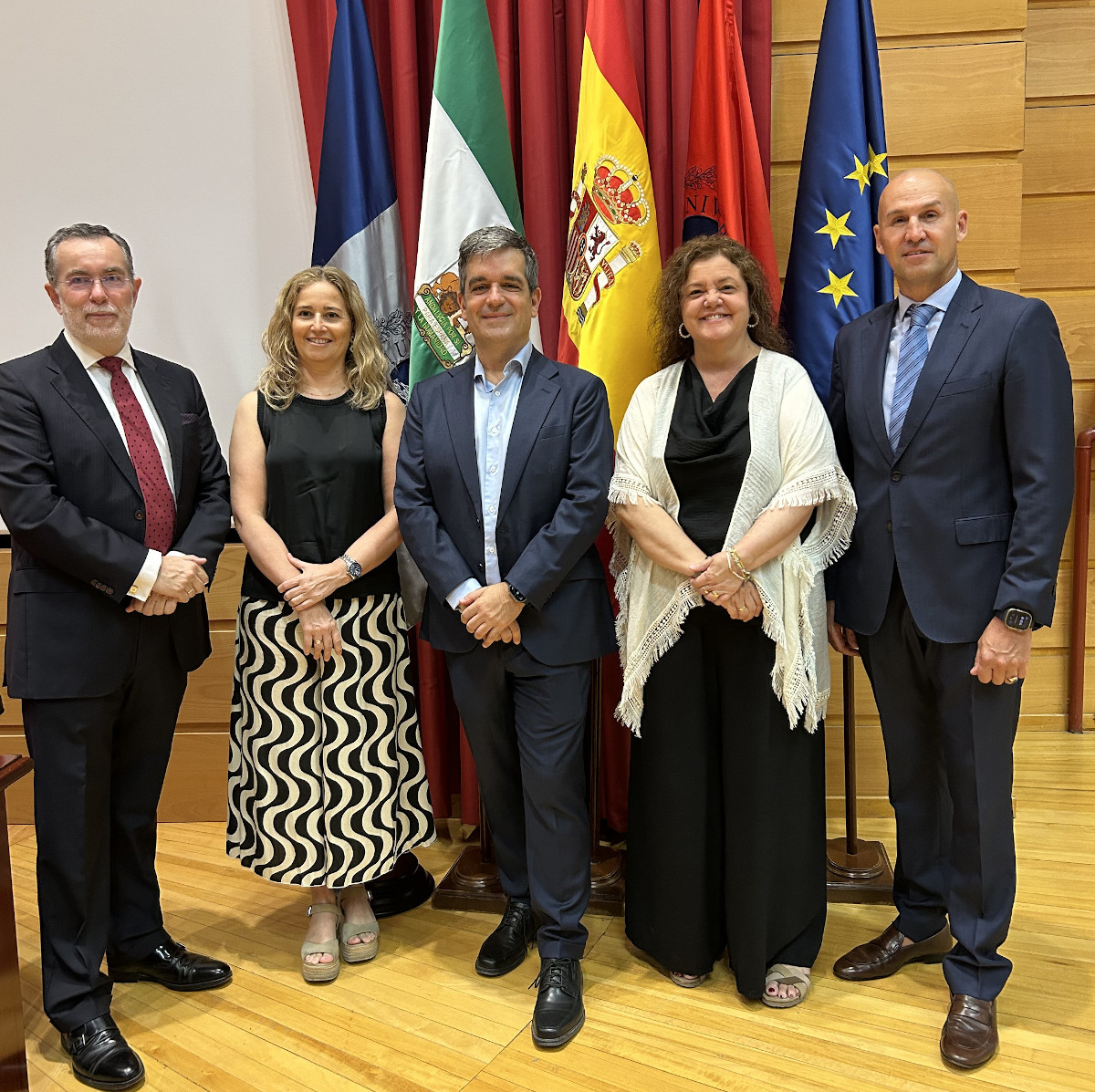
The agreement, signed by Manuel Guerrero, Unicaja’s Director General of Strategy and the CEO’s Office, and Teodomiro López, Rector of the UMA, establishes the Chair as a stable platform for collaboration between the university, businesses and institutions. Its aim is to facilitate the training of students and professionals in areas that have become established as crucial to business development and competitiveness.
This chair will focus its activities on research, training and outreach in the areas of risk management, sustainability and business digitalisation, paying particular attention to regulatory risks and the strategic role of the legal, compliance and corporate governance functions. All of this takes place within a business context characterised by increased regulatory demands, the evolution of ESG standards, digital transformation and the need to move towards more competitive and sustainable business models.
Its areas of activity include organising specialised conferences and seminars, launching training programmes for students and professionals, promoting technical publications, and developing research and knowledge transfer projects with direct applications for business. It will also encourage student participation in initiatives linked to the business world.
The initiative is spearheaded by the Department of Special Private Law at the University of Málaga, through its Commercial Law Section. Professor Juan Ignacio Peinado Gracia will be responsible for its technical management, whilst Professor Jorge Manrique de Lara Jiménez will serve as the coordinating secretary.
Manuel Guerrero, Unicaja’s Director General of Strategy and the CEO’s Office, stated that “the areas covered by this chair are closely linked to some of the main challenges facing businesses and institutions”. In this regard, he added that “risk management, sustainability and digital transformation form part of Unicaja’s strategic priorities”.
He also highlighted the value of this collaboration in “promoting specialised training and strengthening the link between the university and the business community, helping to transfer useful knowledge to the economy”.
The rector of the University of Malaga (UMA), Teodomiro López, emphasised that the new chair represents “a further commitment to public-private partnership” aimed at bringing academic knowledge closer to the key challenges facing the business community. In this regard, he stressed that “risk management, sustainability and digitalisation are now essential pillars for business competitiveness”, and therefore defended the university’s role in improving training, promoting applied research and creating knowledge transfer platforms that respond to the real needs of the business environment.
The Chair in Risk Management, Sustainability and Digitalisation in Business will hold its launch event and first information session on 21 September at the Rector’s Office of the University of Málaga, located on Avenida Cervantes.
This event will serve to publicise the Chair’s objectives, areas of focus and initial activities, as well as to provide an initial forum for dialogue between the university, businesses, institutions and professionals involved in risk management, sustainability and business digitalisation.
Commitment to innovation and sustainability
Unicaja’s participation in this initiative is part of its transformation strategy, which incorporates digitalisation, the improvement of its customer relationship model and sustainable growth as key areas of focus, as well as its commitment to economic development and knowledge transfer in the regions where it operates.
Indeed, it maintains close ties with businesses, the self-employed and entrepreneurs, supporting them in their growth and adaptation to an environment characterised by digital transformation, sustainability and new regulatory requirements.
Furthermore, this collaboration complements other initiatives that Unicaja has been developing in the university sector, in line with its commitment to education, research and the promotion of talent, and with its ultimate aim of fostering the generation and transfer of knowledge.