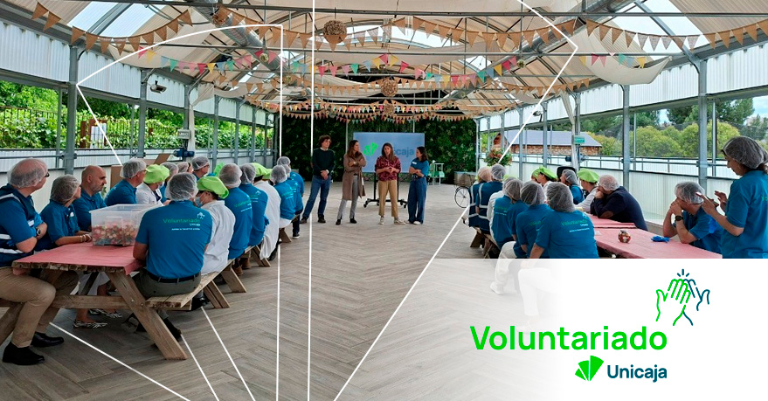
Unicaja has launched its new Corporate Volunteering Programme, an initiative under which it coordinates the social and environmental actions it had already been carrying out, integrating them in a structured manner into its sustainability policy and the 2025–2027 Strategic Plan.
The programme aims to channel staff participation in a structured manner into projects with a social and environmental impact in the regions where the organisation operates, helping to strengthen the local social fabric and address the specific needs of each community.
Corporate volunteering is structured around projects linked to social inclusion, education, health, employability and environmental sustainability. This approach enables progress towards a stable model and reinforces the coherence of Unicaja’s social initiatives.
In this regard, the volunteering model capitalises on Unicaja’s extensive geographical reach and the implementation of its network to facilitate the development of initiatives tailored to the social realities of the various geographical areas in which it operates.
The initiative is conceived as a cross-cutting tool that strengthens the organisation’s relationship with its local communities and helps to consolidate a corporate culture focused on people and the long term. Within this framework, volunteering is integrated as a specific strand within Unicaja’s ESG policy, in line with environmental, social and governance principles.
'Voluntariado Unicaja' app
To provide operational support for the programme, Unicaja has developed the internal ‘Voluntariado Unicaja’ app, through which staff can view active initiatives, find out about their scope and sign up easily. The app centralises information and facilitates the management of volunteering, as well as coordination with partner organisations and the monitoring of activities carried out in the various regions where the organisation operates.
As Manuel Guerrero, Unicaja’s Director General of Strategy and the CEO’s Office, pointed out, “this programme enables us to organise and strengthen our social action, facilitating genuine staff participation, in line with our sustainability strategy”.
Guerrero emphasised that “corporate volunteering also represents an opportunity to strengthen internal cohesion and continue building a corporate culture based on closeness, engagement and the creation of shared value”.
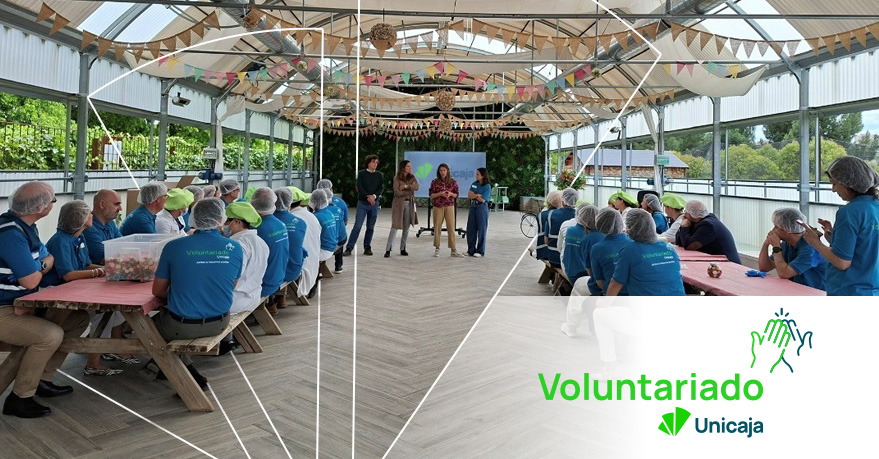
As a starting point, the organisation has developed two initiatives: the first, in partnership with the A LA PAR Foundation, a leading organisation in the inclusion of people with intellectual disabilities; and the second, in collaboration with the Quiero Trabajo Foundation, focused on supporting women in vulnerable situations. These initiatives have enabled the organisation to test the programme’s operational model and the processes for coordination and internal participation.
The launch of the programme builds on Unicaja’s long-standing track record of social collaboration with various organisations in the social and welfare sectors. Building on this foundation, the organisation plans to incorporate new initiatives and gradually expand the scope and geographical reach of its corporate volunteering activities as the model becomes more established.