Unicaja and Asaja Extremadura have signed a new collaboration agreement with the aim of supporting and facilitating activity in the agricultural sector within the region. Specifically, with this partnership, farmers and livestock breeders are provided with advance payments of Common Agricultural Policy (CAP) subsidies.
The aim is to offer financial tools and services tailored to the needs of farmers and livestock breeders, thereby contributing to the promotion and development of the Extremadura agricultural sector.
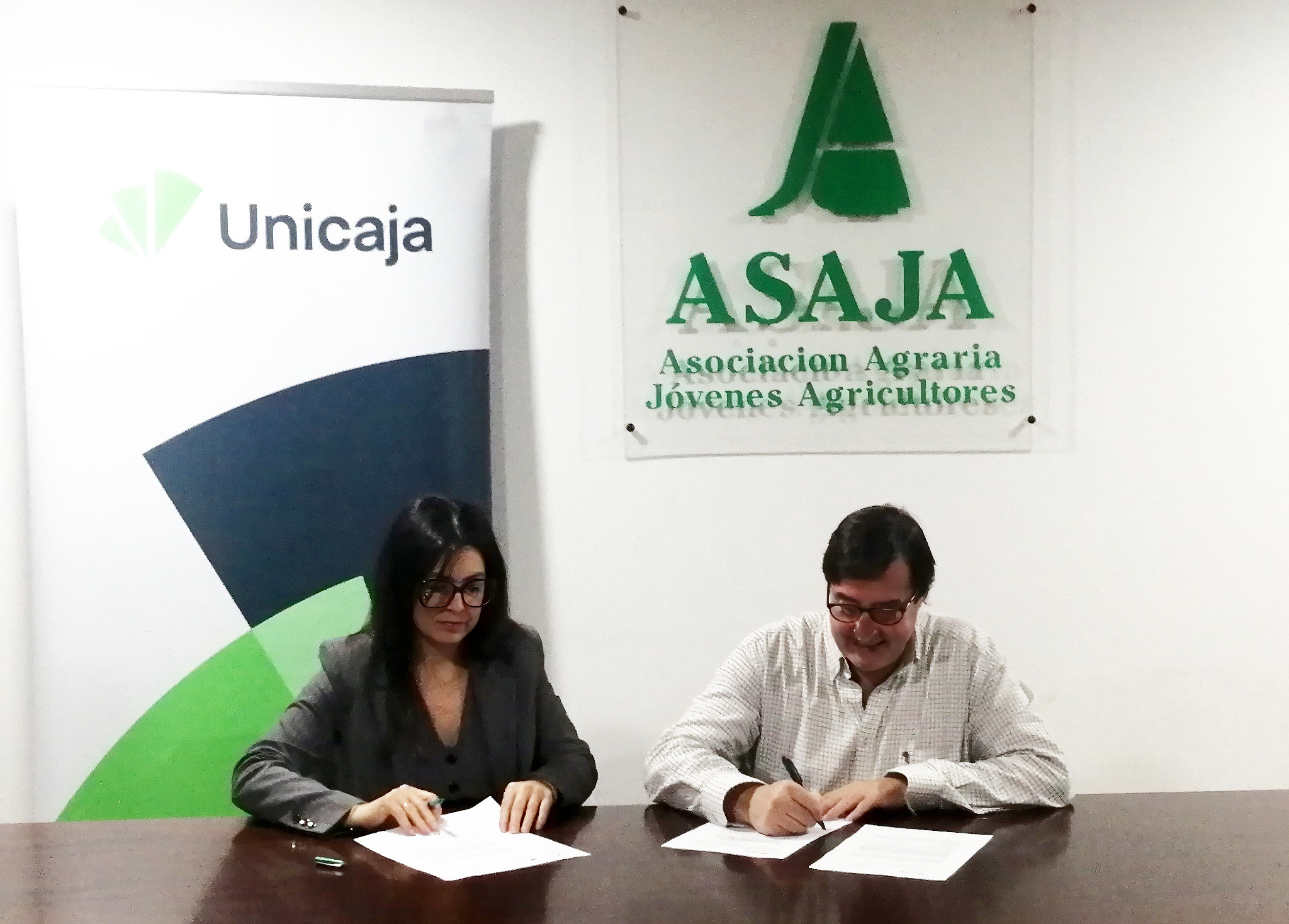
The agreement was signed by Unicaja’s regional manager for Extremadura, Marga Serna, and the president of Asaja Extremadura, Ángel García Blanco, who highlighted the long-standing collaboration between the two organisations, aimed at supporting the day-to-day work of farmers and livestock breeders.
Unicaja offers agricultural professionals who submit their single CAP application through the bank access to an advance on aid under favourable terms, allowing them to cover the costs of their day-to-day activities with greater peace of mind.
The deadline for submitting the single application remains open until 30 April, whilst the advance can be formalised until 31 October.
For this year, Unicaja has made €1,000 million in pre-approved financing available, including CAP advances and support for intensive farming, which will enable the bank to meet the liquidity needs of thousands of professionals.
Strategic support
Commenting on this agreement, Unicaja’s regional manager for Extremadura noted that, “for us, the agricultural sector is strategic and forms part of our identity as an institution closely tied to the region”. She added, “we want to offer farmers and livestock breeders financial tools tailored to their needs and thus help them carry out their activities with greater stability and security”.
“Our aim is to support the sector in facing current challenges, from the management of subsidies and financing to the modernisation of farms, thereby strengthening the economic development of rural areas in Extremadura,” said Serna.
For his part, the president of Asaja Extremadura stated that “the renewal of this agreement is a vital tool for farmers and livestock breeders in Extremadura, as it provides them with liquidity at key moments during the farming year. The advance payment of CAP subsidies facilitates farm planning and helps agricultural professionals to meet production costs with greater confidence”.
He also emphasised that “collaboration with financial institutions committed to the agricultural sector is essential to guarantee the viability of many farms, especially in a context marked by rising costs and the need to continue modernising the Extremadura agricultural sector”.
Finally, García Blanco highlighted that “at Asaja Extremadura, we will continue working to ensure that farmers and livestock breeders have the tools to improve their competitiveness and secure generational succession in rural areas”.
Unicaja’s track record in the agricultural and food industry is underpinned by a comprehensive service model, which includes financial, insurance and advisory solutions. All of this is aimed at addressing the specific needs of the sector.
This collaboration also takes the form of agreements with public authorities and participation in specialised events in Extremadura, such as Agroexpo, one of the leading trade fairs for the agro-industrial sector
Asaja Extremadura aims to defend family farms and agricultural businesses in Extremadura, as well as to promote their development as a viable economic activity, seeking to improve young people’s access to the sector, their skills and vocational training, and, in general, to defend the competitiveness of the Spanish agricultural sector.