
Unicaja Banco and Cooperativas Agroalimentarias Extremadura have reaffirmed the essential role that women farmer which are members of cooperatives play in the development of rural communities, claiming for the incorporation and permanence of women in farming activities to be a priority.
The above has become clear at the training workshop ‘Equality in Agrifood Cooperatives’, organized by Cooperativas Agroalimentarias Extremadura with the collaboration of Unicaja Banco and held in Valdastillas (Caceres), to discuss the equality measures implemented in Extremadura’s agrifood cooperatives.
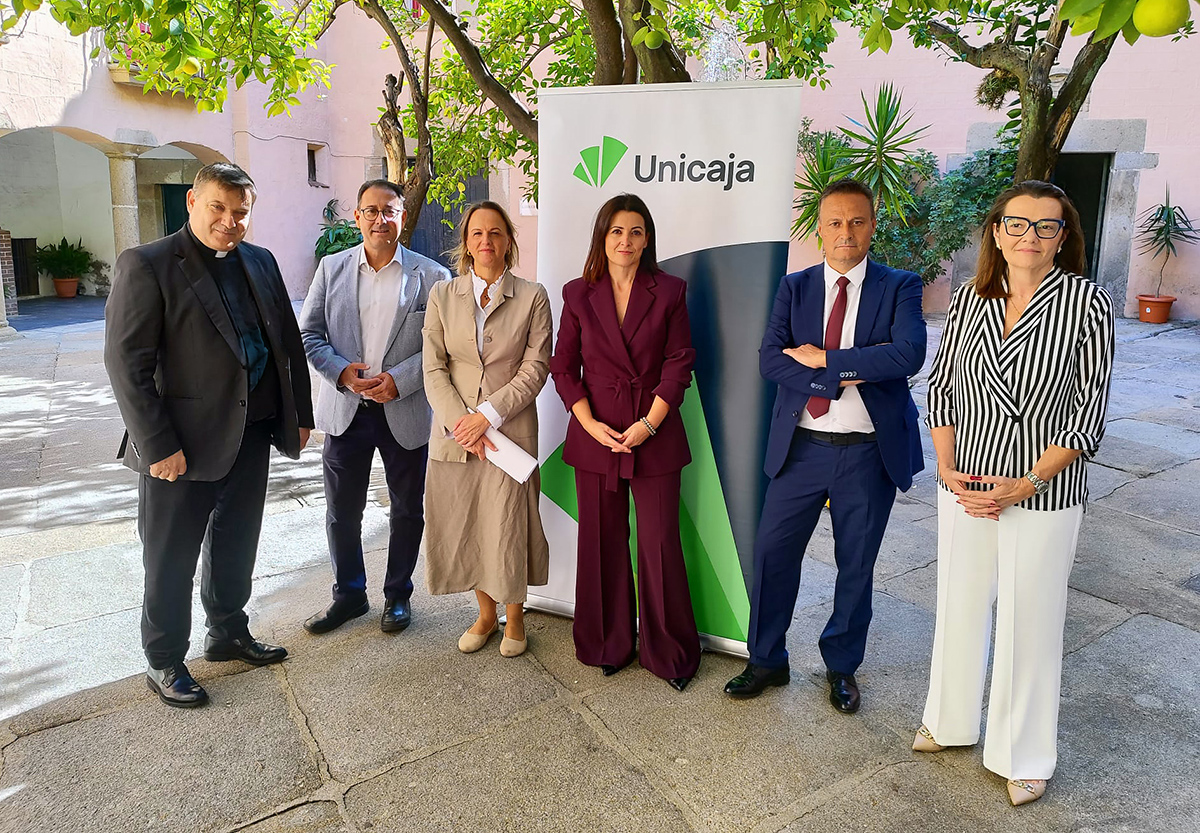
At the opening ceremony, Unicaja Banco’s Regional Manager for Northern Extremadura, María Izquierdo, remarked ‘the bank’s support to this kind of actions to facilitate the economic and business boost of Extremadura rural communities, fostering equality’.
The President of Cooperativas Agroalimentarias Extramadura, Ángel Pacheco, said that the number of women in executive councils of cooperatives has increased by 28.2% in 2020, up to 227 from 163 women who held a position in those management bodies in 2019, a significant rise.
‘Those figures reflect the steps that we have taken, with an important work carried out by Cooperativas Agroalimentarias Extremadura and its members. Now we want to continue to increase those numbers to continue to support the future of our villages and the region’s economy’, Pacheco highlighted.
The Director General of Cooperatives and Social Economy, Angélica García, has assessed the equality measures that are being promoted by the cooperative sector in the region, remarking that the Regional Government has prepared a ‘modern’ law on cooperative companies where equality is an ‘essential pillar’ to raise awareness and reach the effective incorporation of women to the rural environment, breaking glass ceilings.
In the workshop organized today by Cooperativas Agroalimentarias Extremadura and Unicaja Banco, participants analysed all the equality measures that cooperatives must meet, both those included in the Extremadura Law on Cooperatives and those included in the Spanish Law 3/2007 on the effective equality between women and men, as well as the Royal Decrees that include equality plans and their registration and pay equity between women and men.
Cooperativas Agroalimentarias Extremadura also presented the actions developed to the benefit of its members in this area and presented the guide ‘La igualdad en las cooperativas agroalimentarias. Ley 9/2018 de sociedades cooperativas de Extremadura' (‘Equality in agrifood cooperatives. Law 9/2018 on Extremadura cooperative companies’), which seeks to facilitate compliance with equality topics by cooperatives.